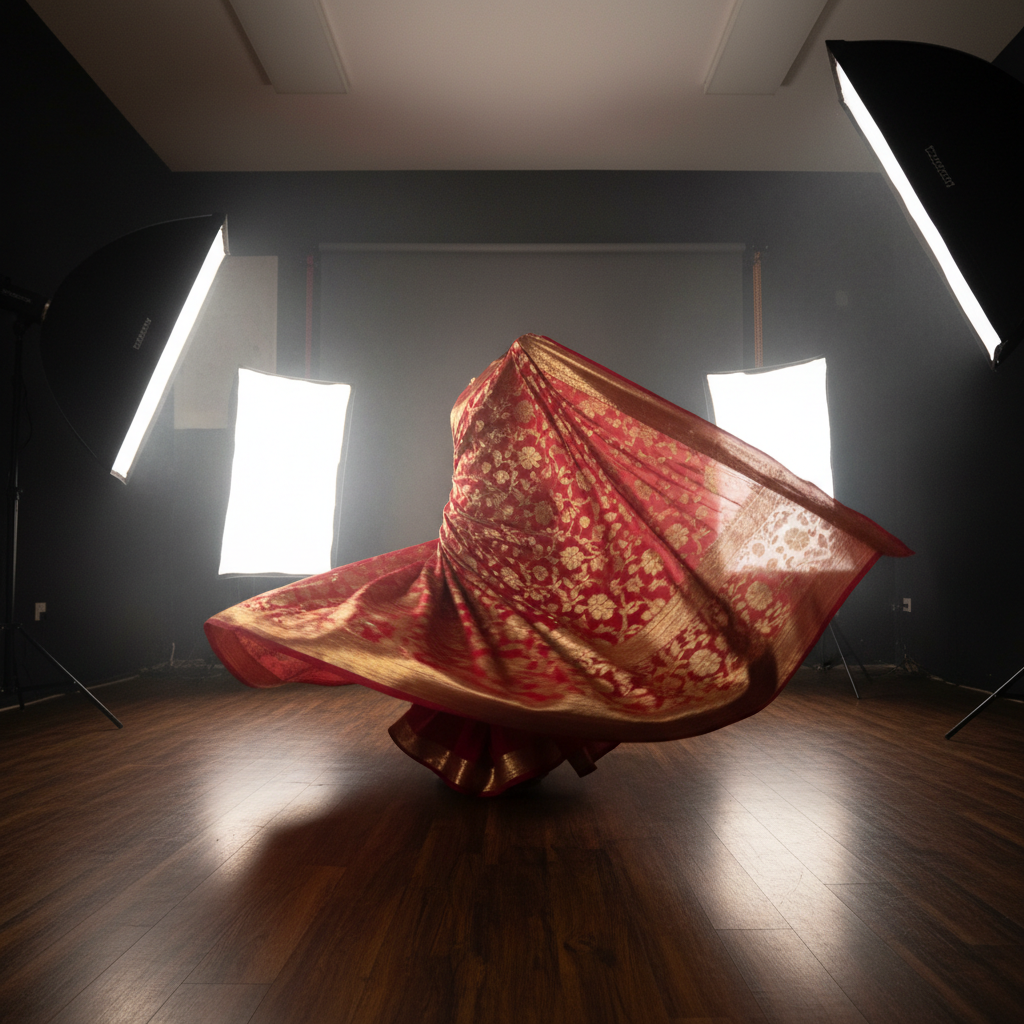
Six yards of Varanasi — Three generations of craft
Woven from
memory
into cloth
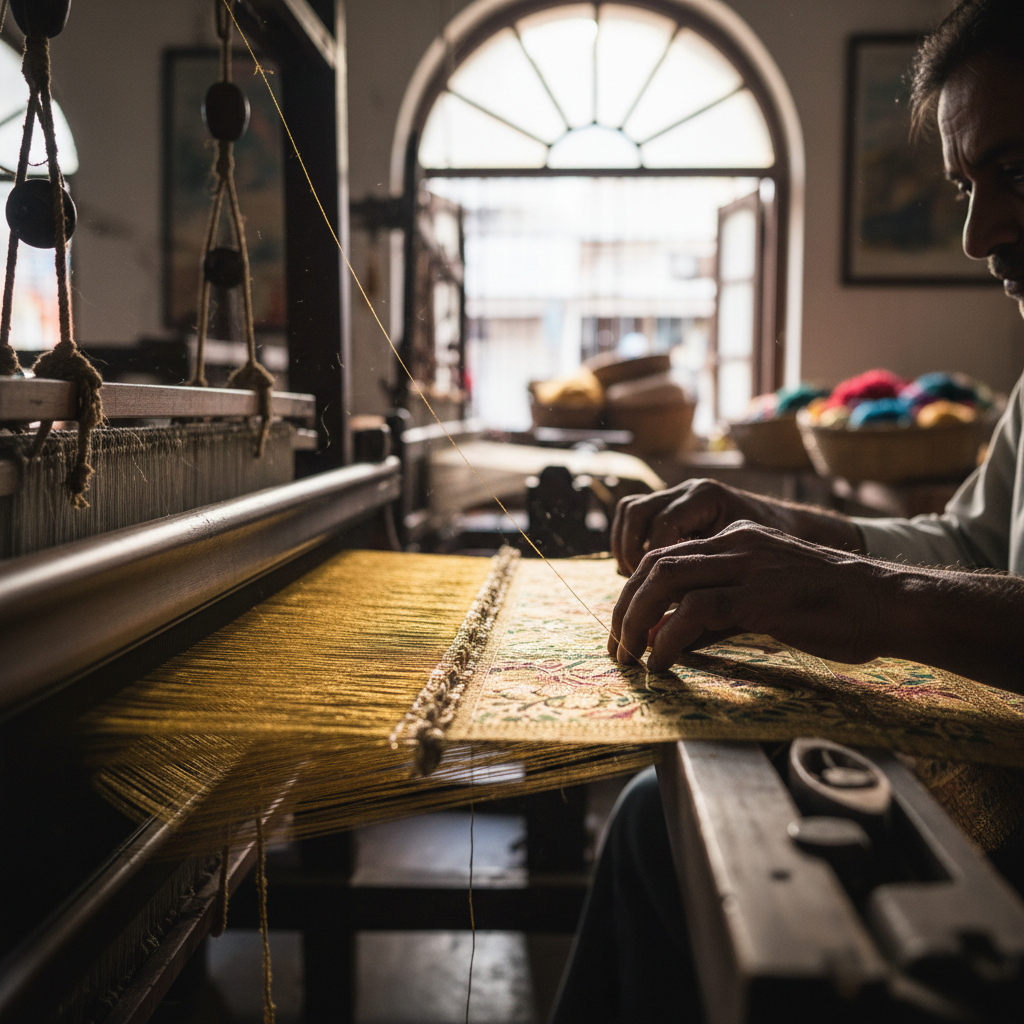
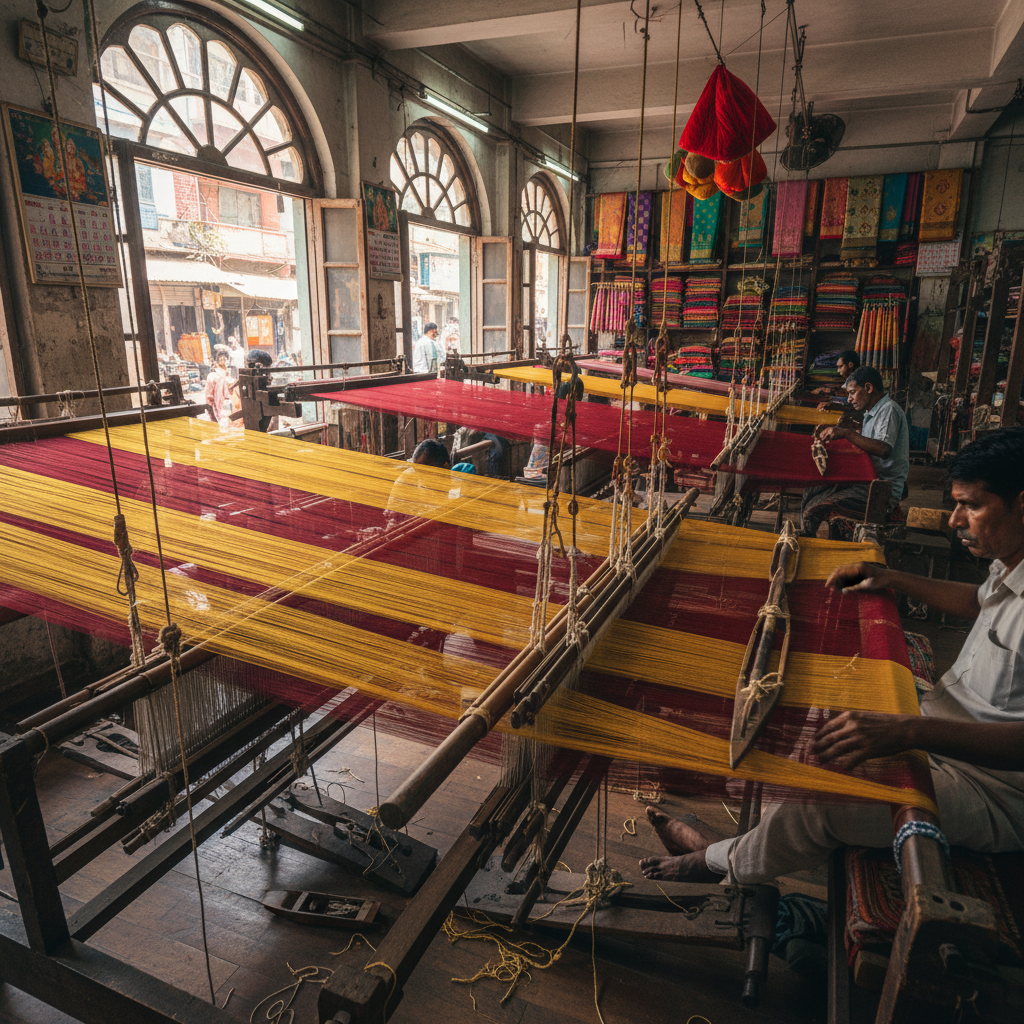
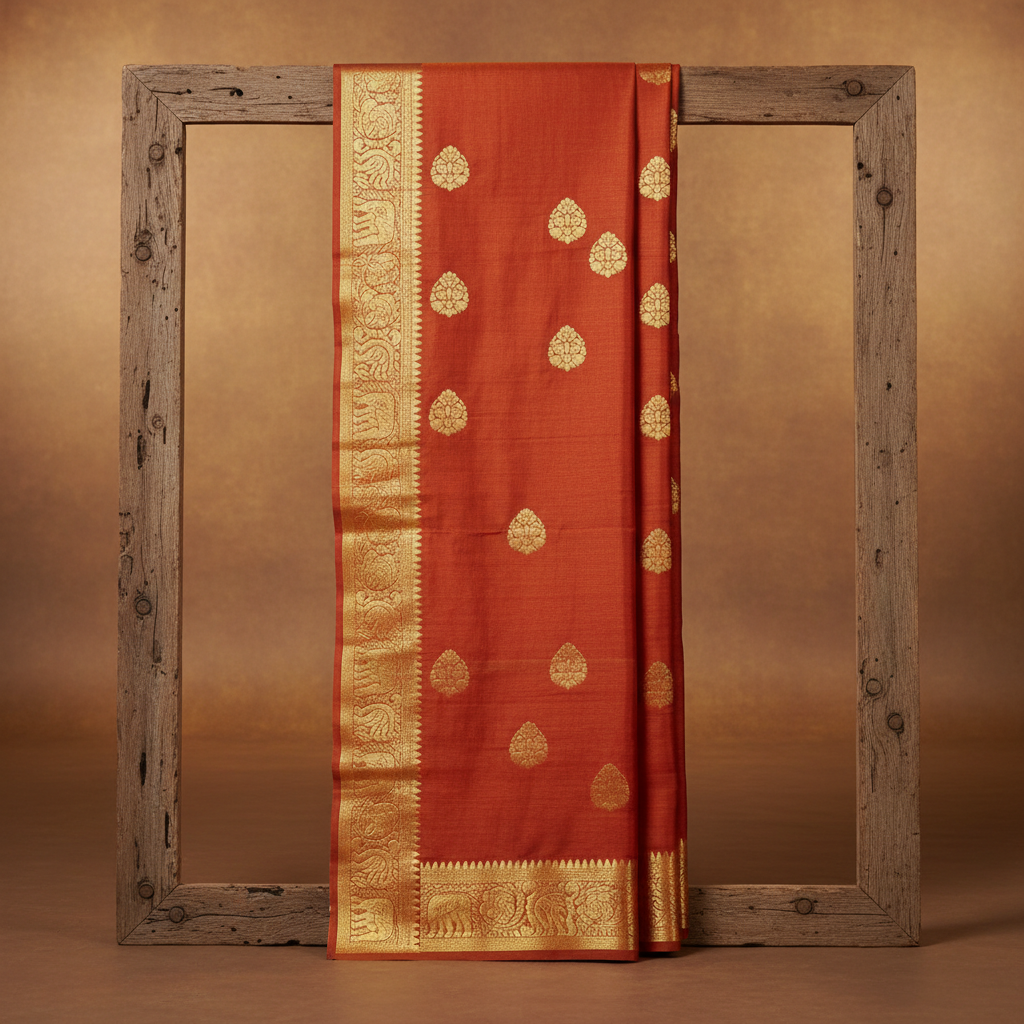
In the narrow lanes of Varanasi, the same loom that wove your grandmother's wedding saree still turns. Our weavers carry three generations of muscle memory — the angle of the shuttle, the tension of the warp, the exact moment a zari thread catches and holds light like nothing manufactured can replicate.
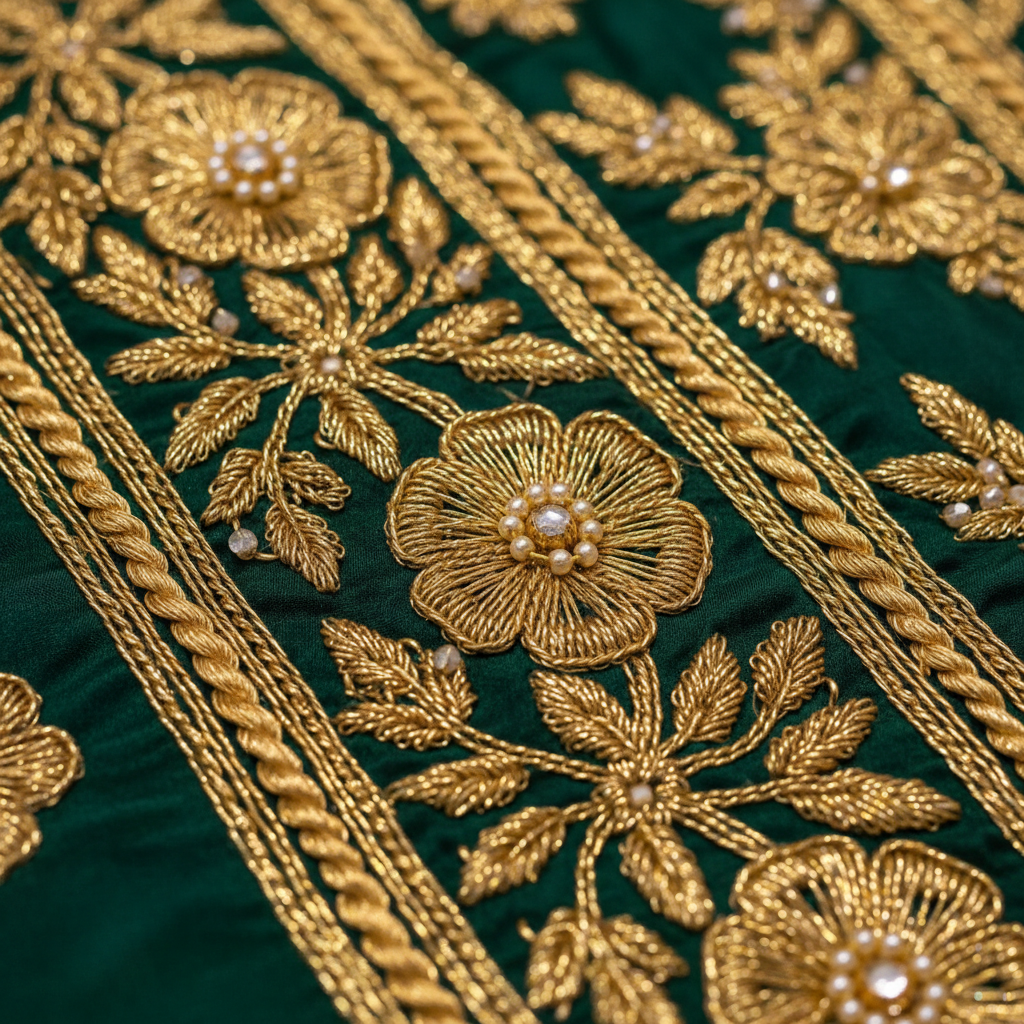
Close enough to
count the threads
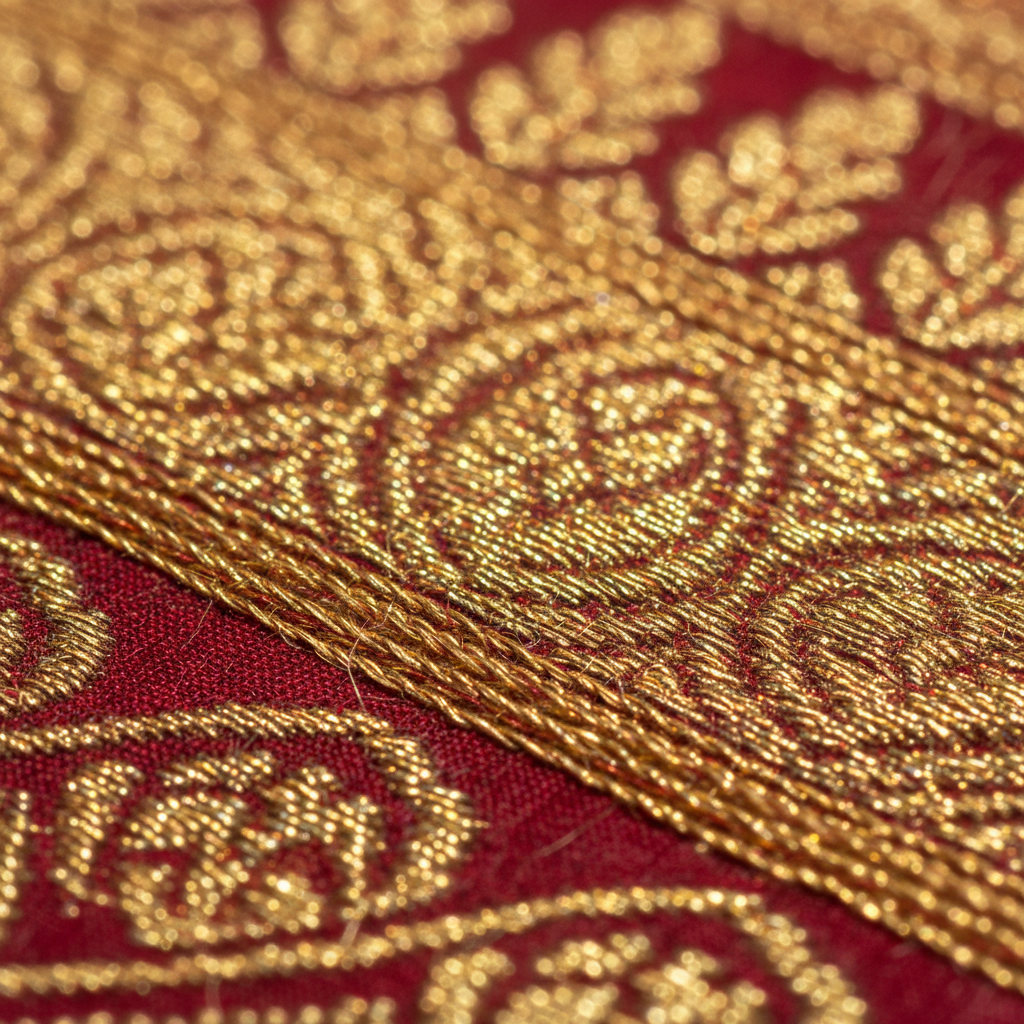
Pure Katan silk. Real zari. No synthetic substitutes. The weight of a Drape saree is the weight of honesty — you feel the difference the moment it falls across your palm.
03 — The Drape
The moment
before the
room goes quiet
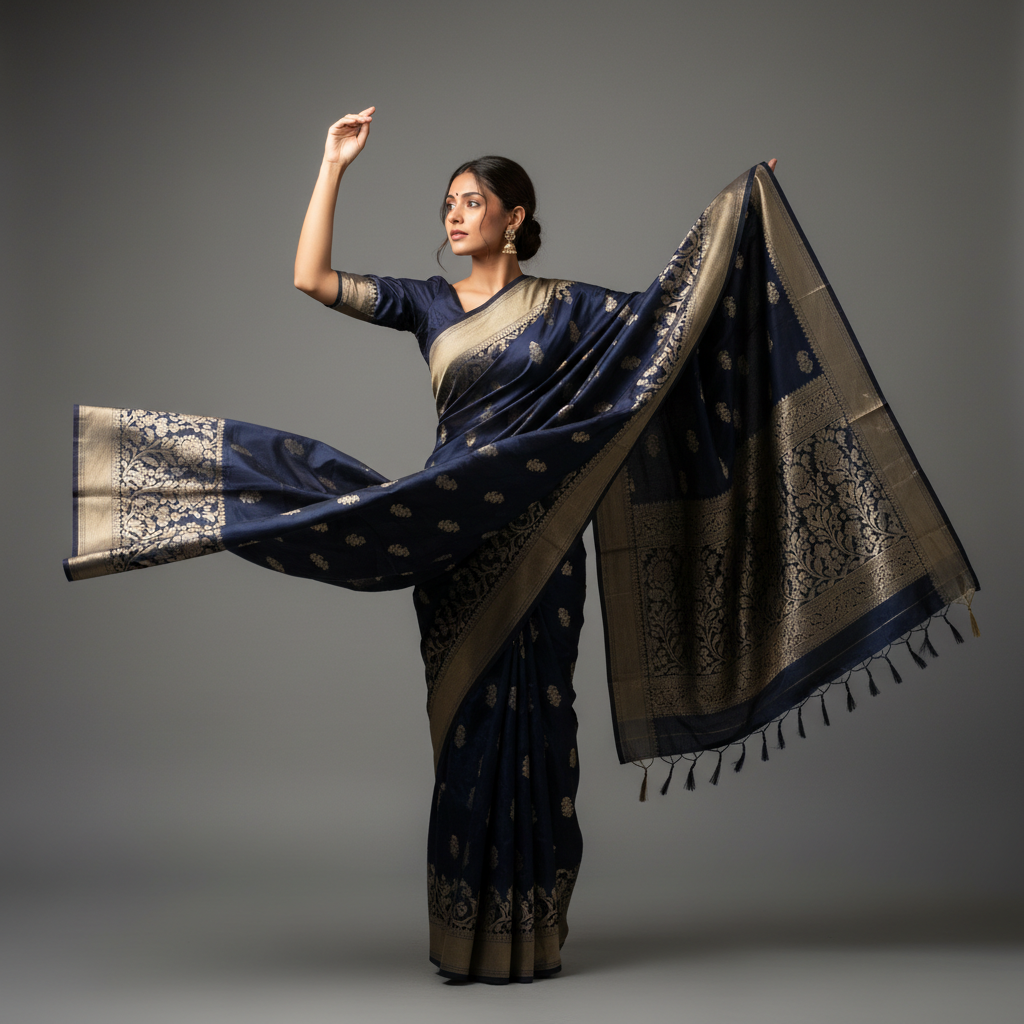
A saree is not worn — it is composed. Each drape is a choice: how much pallu falls, where the pin catches, the exact tension of the pleats. Our sarees are cut for the woman who has learned that dressing is an act of authorship.
"A saree is the only garment in the world that requires no tailoring and still fits every body perfectly."
— Ritu Kumar
She knows what
she is choosing
Drape serves women who understand that a saree is not a purchase — it is a position. On craft. On identity. On what endures.
The NRI Bride
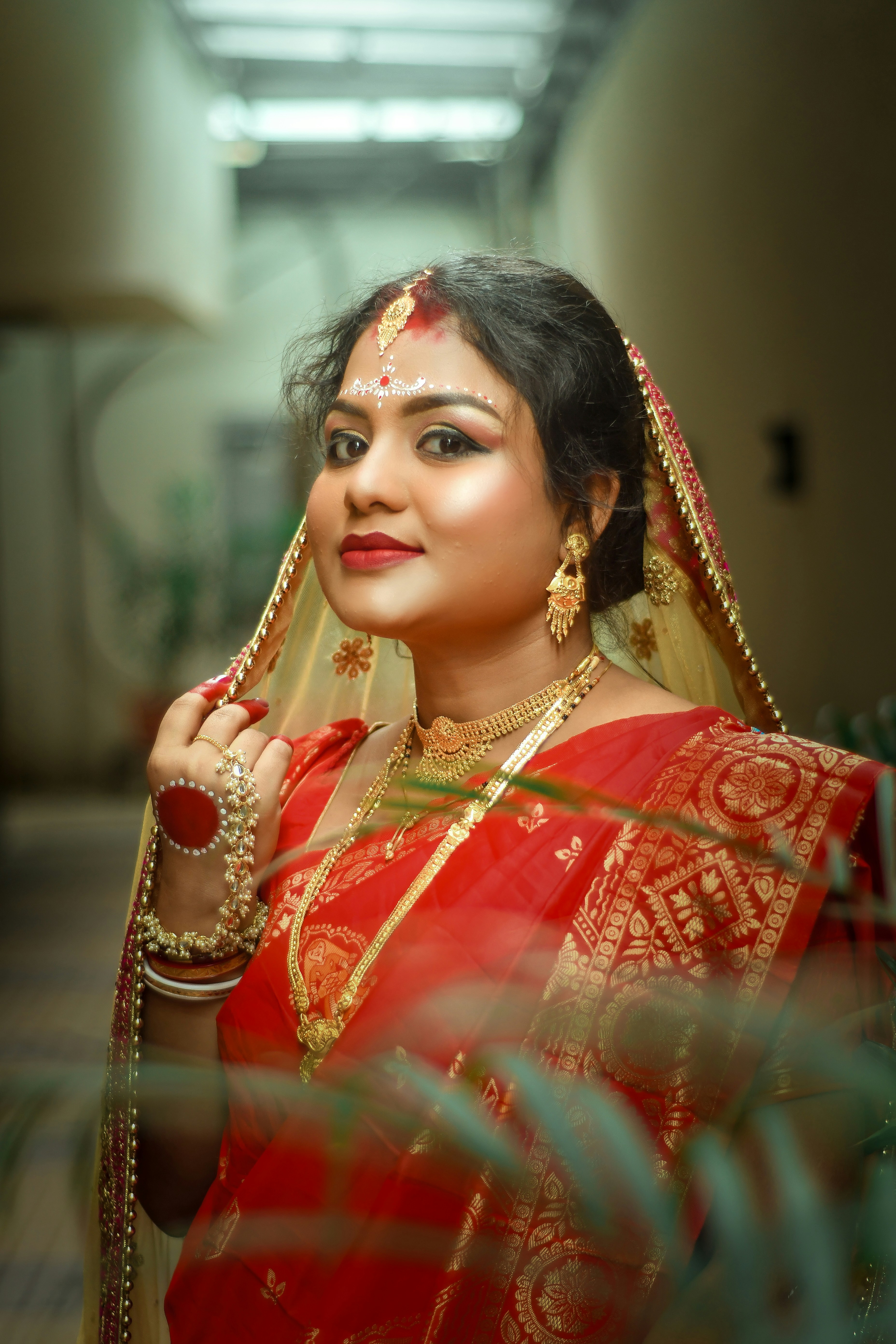
Building a trousseau from Toronto or London. She wants the Banarasi her mother would have chosen — but with a woman who knows exactly who she is today.
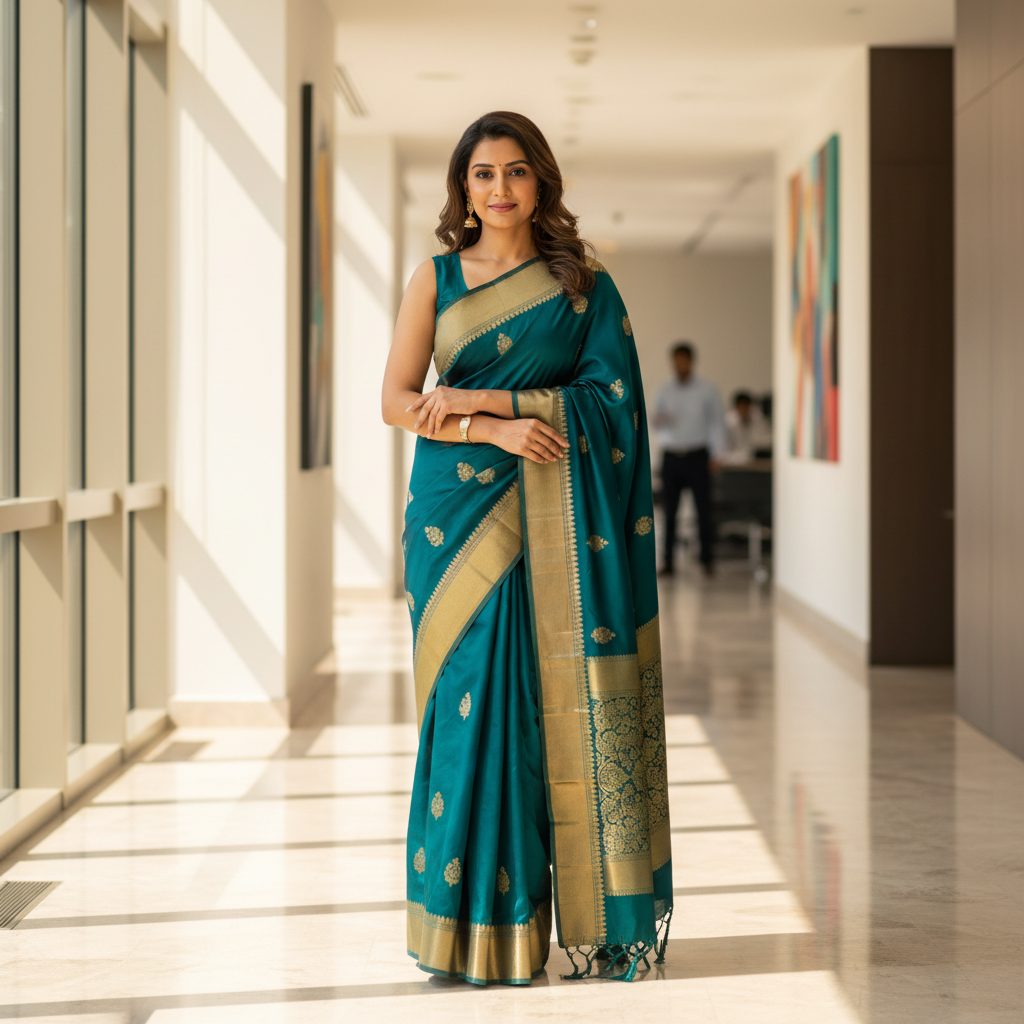
The Boardroom Woman
She wears a Kanjivaram to the Diwali board meeting because a saree is not occasion wear — it is power wear. She collects, she discerns, she does not compromise.
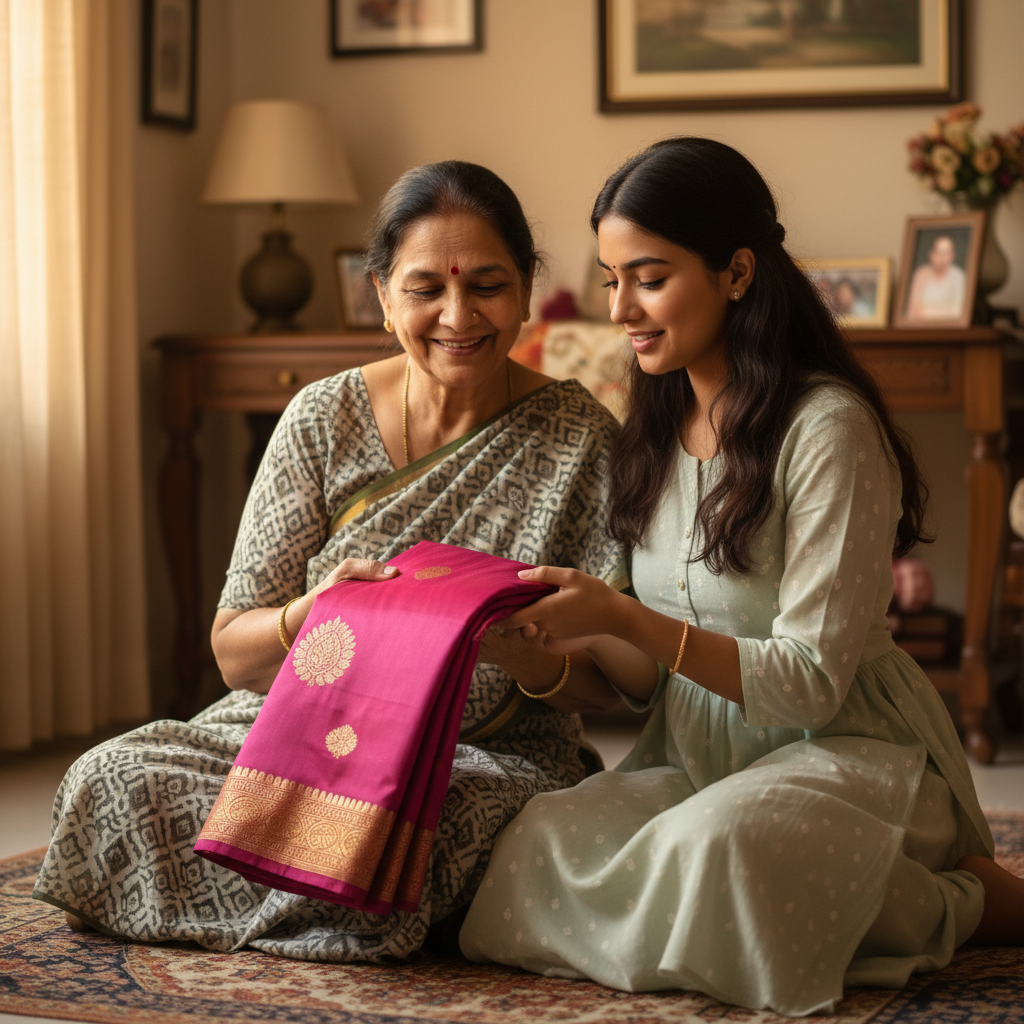
The Mother Gifting
The first Kanjeevaram a daughter receives becomes the measuring stick for every saree that follows. She is choosing an heirloom, not a garment.
"I ordered my bridal Banarasi from Vancouver. When it arrived, my mother cried. It was exactly what she would have chosen for me — but I chose it myself."
"The Kanjeevaram I wore to our IPO listing. Non-negotiable choice."
"My daughter's first saree. She will give it to her daughter."
05 — The Collection